Medical devices are becoming increasingly sophisticated. From ophthalmic diagnostics and OCT imaging to minimally invasive endoscopy and laser-based treatments, manufacturers are constantly balancing competing requirements: higher image quality, faster performance, smaller form factors, improved reliability, and better user experience.
Meeting all these requirements simultaneously is not easy. Traditional optical systems often rely on multiple fixed lenses, mechanical actuators, and complex optical assemblies that increase system size and integration effort. As device manufacturers seek to automate workflows while making systems more compact and more reliable, adaptive optical components are becoming an important enabling technology.
In a recent Optotune webinar focused on medical applications, we explored how tunable lenses, steering mirrors, liquid prisms, and other adaptive optical technologies are being integrated into medical devices across a wide range of applications. Rather than focusing solely on the components themselves, the discussion centered on a practical question: what challenges do medical device manufacturers face, and how can adaptive optics help solve them?
Medical device manufacturers face a wide range of optical challenges. In some systems, the priority is faster and more accurate focusing. In others, it is beam steering, image quality, miniaturization, or long-term reliability in demanding operating environments. Adaptive optical technologies can help address these requirements while reducing the complexity of traditional mechanical solutions.
The following sections explore how adaptive optics are being applied across a variety of medical technologies, highlighting the challenges engineers face, the optical solutions available today, and the benefits they can bring to modern medical devices.
Adaptive Optics for Modern Medical Systems
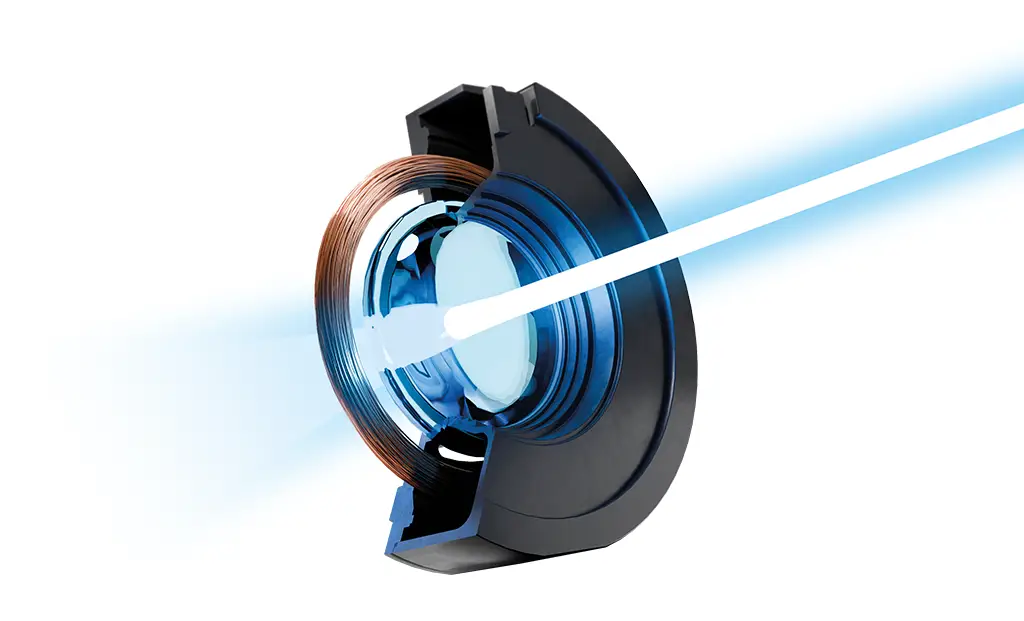
Optotune specializes in optical elements that can actively change their optical properties or position. These include focus tunable lenses, liquid prisms, fast steering mirrors, laser speckle reducers, and beam-shifting devices. By combining optical design, actuators, electronics, and software, adaptive optical systems can dynamically manipulate light without requiring large mechanical assemblies.
The result is often a combination that medical device manufacturers value highly:
- Compact system design
- Fast response times
- High optical throughput
- Low weight
- Long lifetime
- Flexible integration options
These characteristics make adaptive optics particularly attractive in medical applications, where space constraints, reliability requirements, and performance expectations are unusually demanding.
Reliability Matters in Medical Environments
Before looking at specific applications, it is worth addressing a common concern among medical device manufacturers: reliability.
A common question among medical device manufacturers is whether adaptive optical components can withstand demanding operating conditions over the long term. To address these concerns, Optotune subjects its products to extensive environmental and lifetime testing.
For tunable lenses, testing includes evaluations such as:
- Dry heat storage
- Cold storage
- Thermal shock
- Humidity exposure
- Environmental qualification testing
- Long-term lifetime testing
Long-term durability testing demonstrates the robustness of tunable lens technology. In one test, a tunable lens operated continuously across its full focal range for approximately eight months, corresponding to roughly one billion cycles, without failure. This level of durability is supported by the friction-free operating principle used in the lens design.
Steering mirrors have also been tested under temperature cycling, vibration, shock, humidity, and long-term actuation conditions. In one lifetime test, a steering mirror exceeded one billion cycles without visible signs of fatigue, demonstrating the reliability required for demanding medical applications.
For medical equipment manufacturers designing systems intended to remain in service for many years, reliability data is often just as important as optical performance.
Medical Lasers: Precise Beam Steering in Compact Systems
Laser-based medical treatments require extremely accurate beam placement. Whether treating acne, performing tissue ablation, or cutting biological tissue, the ability to position the laser precisely and repeatedly is critical. At the same time, many systems need to remain handheld, compact, and lightweight.
Acne treatment and other laser-based dermatology procedures place demanding requirements on beam steering systems. These systems require laser beams to be directed rapidly and precisely across multiple target locations. To accomplish this, manufacturers need beam steering components that combine speed, repeatability, thermal stability, and compact size.
Fast steering mirrors provide a solution by controlling beam direction in two axes using a single optical element. Compared with alternative approaches based on multiple scanning elements, this architecture can reduce complexity while maintaining high performance. Fast steering mirrors combine large optical deflection angles, integrated position feedback, and compact packaging that incorporates optical, mechanical, and electronic subsystems in a single solution.
For higher-power medical laser systems used in tissue ablation and surgical applications, additional requirements emerge. Optical coatings must withstand specific wavelengths and power levels while maintaining mirror flatness and optical quality. Customized mirror coatings can be developed to support mid-infrared treatment wavelengths while simultaneously accommodating visible pilot beams used for alignment and targeting.
Just as important as hardware is software integration. Modern steering systems often require programmable scan patterns and point matrices. Integrated control software enables manufacturers to implement programmable scan patterns and beam-steering sequences without developing every control function from scratch.
Ophthalmology: Making Vision Testing Faster and More Comfortable
Ophthalmology is one of the most established application areas for adaptive optics.
Traditional phoropters and autorefractors rely on large sets of fixed optical elements. During an eye examination, lenses are mechanically introduced and removed from the optical path until the correct prescription is determined. While effective, these systems are bulky and involve numerous moving parts.
The challenge is clear: maintain a large clear aperture and broad diopter range while reducing complexity and preserving repeatability. Vision-testing systems require exceptionally accurate measurements because even small errors can affect the final prescription provided to the patient.
Adaptive optics offer an alternative approach. Rather than cycling through large collections of trial lenses, tunable lenses can continuously adjust optical power electronically. This enables more compact instrument designs while maintaining the required optical performance. These solutions can be integrated into both traditional benchtop instruments and newer portable diagnostic devices.
The benefits extend beyond system design. Faster operation, lower weight, reduced noise, and improved patient comfort all contribute to a better clinical experience. Future developments are expected to move beyond spherical correction alone and address additional visual aberrations, including astigmatism and prism correction.
OCT Systems: Balancing Speed, Accuracy and Flexibility
Optical Coherence Tomography (OCT) has become one of the most important imaging methods in ophthalmology and many other medical specialties.
Although OCT systems vary widely in their architecture, several recurring requirements appear consistently. Manufacturers often need fast focus adjustment, large diopter compensation ranges, compact integration, low thermal drift, and straightforward retrofitting into existing instrument designs.
Retinal OCT systems with wide fields of view present a particularly interesting use case for adaptive optics. These systems must accommodate variations between patients and compensate for different refractive conditions. Tunable lenses can simplify this process by providing dynamic focus adjustment without requiring large mechanical assemblies.
Steering mirrors can address another aspect of OCT performance: scanning. Many OCT architectures require rapid X-Y scanning patterns across tissue. Steering mirrors can support common scan strategies while maintaining compact system dimensions and fast response times.
An additional advantage is integration flexibility. Many device manufacturers prefer upgrading existing systems rather than redesigning them entirely. Because adaptive optical components are compact and relatively easy to incorporate into existing optical layouts, they can often support retrofit projects as well as new designs.
Dermatology: High-Resolution Imaging for Early Detection
Early detection is one of the primary goals of many dermatology imaging systems.
Full-body skin screening platforms aim to identify suspicious lesions across large body areas while maintaining image quality sufficient for clinical evaluation. Achieving both wide coverage and high resolution simultaneously can be challenging and expensive. Many systems rely on large numbers of cameras to capture adequate detail.
Combining tunable lenses with steering mirrors offers an alternative approach. Adaptive optics can expand effective field of view while preserving image quality, potentially reducing system complexity and lowering hardware requirements.
Optotune has also participated in the European iToBoS project, which focused on advanced methods for melanoma detection. One challenge in this field is balancing coverage and resolution. Systems that inspect very large areas may lack sufficient detail for diagnosis, while high-resolution approaches often require additional examination steps. Adaptive optics can help bridge this gap.
Endoscopy: Moving Beyond Manual Focus
Endoscopy presents some of the most demanding optical requirements found in medical devices.
Space is extremely limited, image quality must remain high, and working distances can vary dramatically during procedures. Historically, many endoscopes have relied on manual controls for focus and zoom adjustment. In traditional systems, clinicians may need to dedicate both hands to operating the optical system itself.
Chip-in-Scope Endoscopes
In chip-in-scope systems, optical components are located near the operator rather than at the distal tip of the endoscope. Traditional designs commonly use mechanical controls that must be adjusted during use.
By incorporating tunable lenses, manufacturers can replace manual focusing mechanisms with electronic focus control. Focus changes can be performed rapidly, often in milliseconds, while maintaining compact system dimensions. Electronic focus control also opens the door to continuous autofocus functionality that can automatically compensate for movement during procedures.
Chip-on-Tip Endoscopes
Chip-on-tip endoscopes impose even stricter space limitations because much of the optical system is located directly at the distal end of the device.
In these systems, optical elements may need diameters as small as a few millimeters while still maintaining image quality across a broad range of working distances. Miniature tunable lens cores can be integrated with specialized actuator designs to enable electronic focusing without significantly increasing device dimensions.
The result is easier handling, improved usability, and the possibility of advanced focus-control features that would be difficult to implement using traditional optical architectures.
The Future of Medical Device Optics
Across ophthalmology, OCT, dermatology, endoscopy, and medical lasers, a common pattern emerges. Device manufacturers are seeking systems that are smaller, faster, more automated, and easier to use. Adaptive optics help address these goals by replacing complex mechanical assemblies with electronically controlled optical functionality.
Adaptive optics are no longer limited to research laboratories or niche applications. They are increasingly becoming practical engineering tools used to solve real challenges in medical device design. Whether enabling autofocus in endoscopes, improving beam steering in medical lasers, simplifying ophthalmic instruments, or supporting next-generation imaging systems, tunable optical components are playing a growing role in the future of MedTech.