Higher resolution is a constant goal in imaging system design. Whether in microscopy, machine vision, display inspection, metrology, or scientific imaging, engineers are continuously looking for ways to extract more detail from a scene.
The traditional path is familiar: increase sensor resolution, reduce pixel size, or move to a larger detector. While effective, these approaches can increase system cost, complexity, and integration effort. Smaller pixels may reduce sensitivity, while larger sensors often require larger optics and more demanding optical designs.
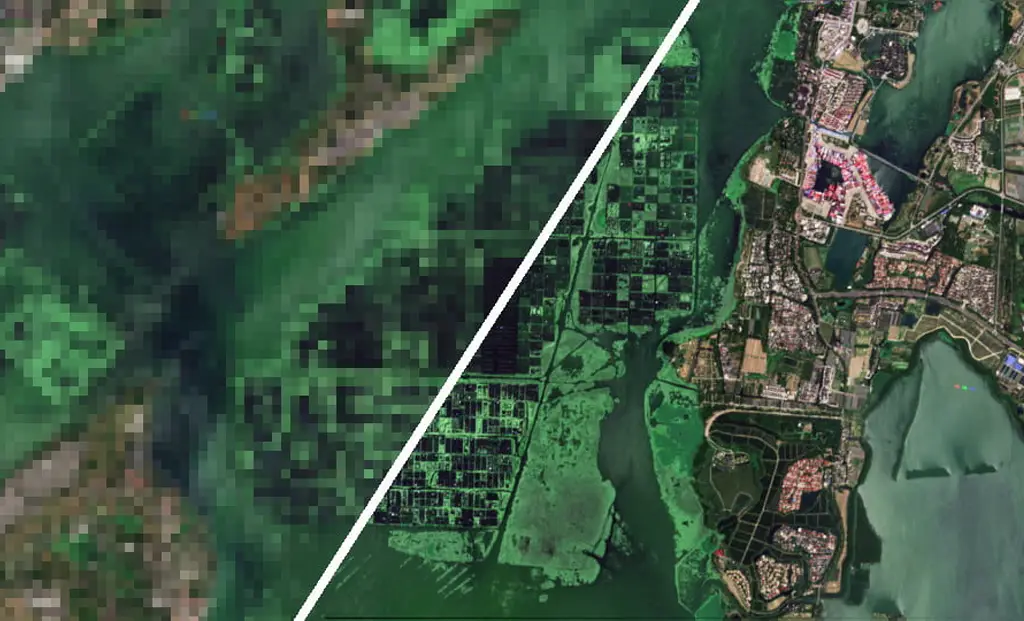
An alternative approach is super-resolution imaging. Rather than relying solely on the native resolution of the sensor, multiple images are captured with precisely controlled sub-pixel shifts and computationally combined into a single image containing more information than any individual frame. One established method uses pixel shifting, where the sensor itself is physically moved between exposures. Another approach is to keep the sensor stationary and shift the incoming light instead.
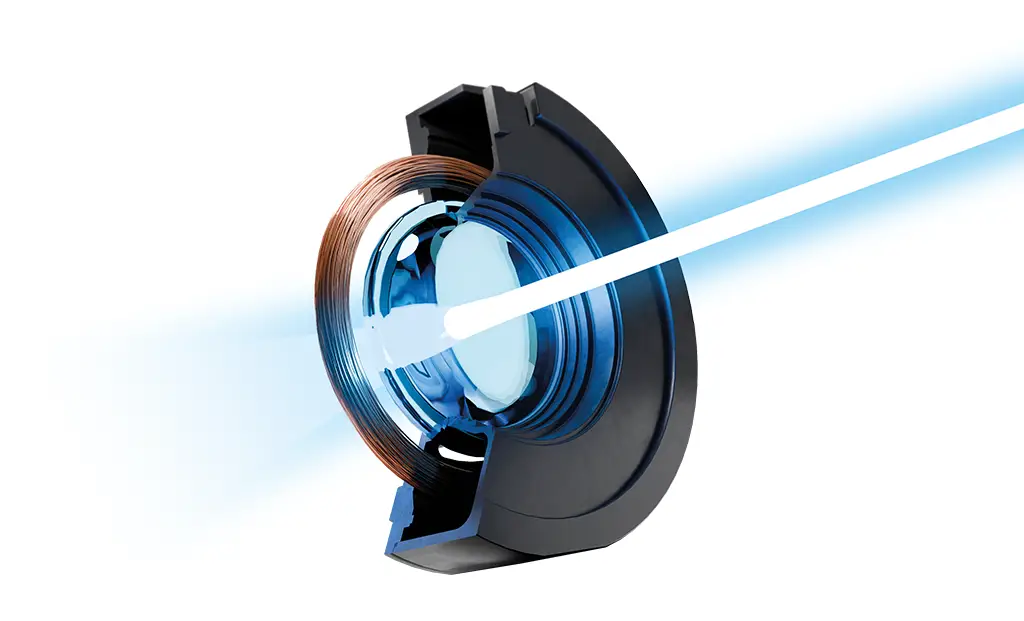
This is where Optotune’s BSW-20 beam shifter comes in. By accurately displacing the incoming beam before it reaches the detector, the BSW-20 enables super-resolution imaging without moving the sensor itself, creating a compact and highly reliable alternative to traditional pixel-shift implementations.
Why native resolution is not always the answer
At first glance, obtaining higher resolution seems straightforward: use more pixels.
In practice, that decision often involves trade-offs. Higher-resolution sensors can increase system cost and data bandwidth requirements. Smaller pixels may capture less light, affecting signal-to-noise ratio and dynamic range. In many systems, changing the sensor may also require redesigning optics, mechanics, or electronics.
As a result, engineers frequently encounter situations where the desired resolution exceeds the practical limits of the available detector. This challenge is especially common in applications where image quality is critical but space, cost, or sensor availability impose constraints. [optotune.com], [optotune.com]
Super-resolution techniques address this problem differently. Instead of relying exclusively on the detector’s native pixel grid, they collect additional spatial information through precisely controlled image shifts and reconstruct a higher-resolution image from multiple frames.
How beam shifting creates super-resolution
Every image sensor samples a scene at discrete pixel locations. Information falling between those pixel centers is only partially captured.
By acquiring multiple images with carefully controlled sub-pixel displacements, it becomes possible to sample the same scene at slightly different positions. Image reconstruction algorithms can then combine these measurements into a higher-resolution result.
Traditionally, these displacements are generated by moving the image sensor itself. Certain cameras perform this operation by shifting the sensor between sequential exposures, creating the sub-pixel sampling needed for super-resolution reconstruction.
The Optotune BSW-20 approaches the problem from the opposite direction.
Instead of moving the sensor, the BSW-20 laterally displaces the incoming light by precisely tilting a glass window. The image moves on the detector while the camera remains stationary. The resulting sub-pixel shifts provide the same type of information required for super-resolution processing while avoiding physical movement of the sensor.
The device supports beam shifts of up to 4.8 µm and is designed for applications requiring accurate and repeatable light displacement.
Sensor shift versus beam shift
| Method | What moves? | Purpose |
|---|---|---|
| Sensor shift | Image sensor | Collect sub-pixel image information |
| Beam shift | Incoming light beam | Collect sub-pixel image information |
In both cases, multiple images are combined to generate a higher-resolution result. The distinction is architectural. By shifting light rather than the sensor, beam-shifting systems can provide an alternative integration strategy while maintaining a stationary detector.
This approach can be particularly attractive in systems where changing the detector package is undesirable or where a compact optical solution is preferred.
Introducing the BSW-20 beam shifter
The BSW-20 is Optotune’s beam-shifting device designed to laterally displace light with high precision. The device uses a bearingless actuation design that eliminates friction and wear, making it suitable for highly reliable continuous operation.
Key characteristics include:
- Clear aperture of 20 × 20 mm
- Fast transition times of approximately 1 ms
- High angular positioning accuracy
- Bearingless operation with no friction-generated particles
- Support for beam shifts up to 4.8 µm
Unlike a specification sheet, however, the real value of these characteristics becomes clear when viewed from an imaging-system perspective.
Fast transition times allow image shifts to occur rapidly between acquisitions. High positioning accuracy helps ensure repeatable sub-pixel displacements. The bearingless design supports long-term operation without the wear mechanisms associated with conventional moving assemblies.
More details and available configurations can be found on the BSW-20 product page.
Application example: Super-resolution imaging
The primary use case explored in the application note is super-resolution imaging.
By capturing multiple images at precisely shifted positions, engineers can generate a final image containing additional spatial information beyond what a single exposure can provide. The beam shifter effectively allows one sensor to sample a scene from multiple sub-pixel locations without requiring a mechanically repositioned detector.
This can be particularly valuable when:
- Smaller pixels are unavailable
- Larger sensors are cost-prohibitive
- Existing camera systems need additional resolution
- System redesign should be minimized
Importantly, the technique does not change the underlying optical principles governing image formation. Instead, it collects more spatial information from the existing optical system and uses image reconstruction to take advantage of that information.
Application example: Display inspection
Display manufacturing is one example where additional image detail can provide significant value.
Modern displays contain extremely small features, and detecting defects often requires more sampling resolution than a camera sensor can natively provide.
Beam-shifting approaches can help create multiple sub-pixel observations of display structures, enabling enhanced image reconstruction and improved visibility of fine details. For inspection systems, this can offer an alternative to replacing sensors with more expensive high-resolution alternatives.
The same principle can extend to a variety of other imaging applications where fine detail is important and detector resolution presents a limiting factor.
Beyond imaging: Additional applications
Although frequently discussed in the context of super-resolution imaging, the BSW-20 is not limited to imaging systems.
The application note and product literature also identify potential uses in:
- Display inspection
- Metrology
- Optical fiber coupling
- 3D printing
- Projection systems
- Other applications requiring precise lateral beam displacement
In each case, the underlying capability remains the same: precise and repeatable beam positioning achieved by controlled beam displacement rather than mechanical movement of larger system components.
Integration considerations
Like any optical technology, beam shifting is not simply a matter of inserting a component into the optical path.
When evaluating a super-resolution imaging architecture, engineers should consider:
What pixel size must be supported?
The amount of beam shift should correspond to the detector sampling strategy and intended reconstruction method.
How will images be synchronized?
Super-resolution reconstruction depends on accurately capturing frames at known sub-pixel positions.
What reconstruction approach will be used?
Image-processing requirements vary depending on the number of shifted exposures and desired resolution improvement.
Where should the beam shifter be positioned?
Optical placement influences system performance and integration complexity. The BSW-20 is generally positioned in the imaging path between the sensor and imaging optics.
What level of resolution increase is actually required?
The answer influences shift strategy, acquisition workflow, and overall system architecture.
More than a resolution upgrade
The most interesting aspect of beam-shift-based super-resolution is that it changes how engineers approach an imaging problem.
Instead of asking:
“How can we get a higher-resolution sensor?”
the question becomes:
“How can we collect more information from the optical system we already have?”
The BSW-20 provides one answer by precisely shifting the incoming light, enabling sub-pixel image acquisition without moving the detector itself. For applications ranging from super-resolution imaging and display inspection to metrology and optical alignment, this creates new opportunities to increase image detail while preserving existing system architectures.