Medical imaging devices have undergone remarkable changes over the past two decades. Endoscopes have become smaller and more flexible. Ophthalmic instruments provide increasingly precise measurements. IVF laboratories are adopting automation at a pace that would have seemed unrealistic only a few years ago. Dermatology imaging systems are moving beyond simple documentation toward quantitative analysis and AI-assisted diagnostics.
Despite these advances, many optical challenges remain surprisingly unchanged. Medical imaging systems must still produce high-quality images despite changing working distances, limited space, demanding illumination conditions, and increasingly complex clinical workflows.
At the center of many of these challenges lies a deceptively simple problem: maintaining focus.
Historically, focus adjustment was achieved by moving optical elements mechanically. While this approach remains effective, it introduces complexity, occupies valuable space, and can limit how quickly a system responds to changing imaging conditions.
As medical devices continue to shrink while simultaneously becoming more capable, engineers are increasingly exploring alternatives to conventional autofocus mechanisms. One technology gaining significant traction is the electrically tunable liquid lens.
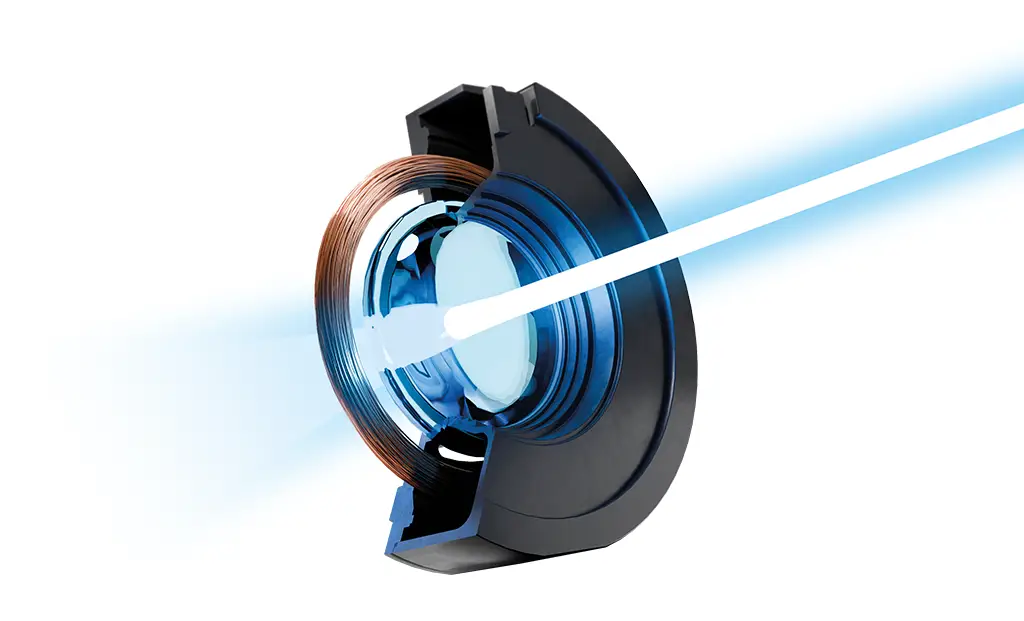
By changing optical power electronically rather than translating lens groups mechanically, tunable liquid lenses allow imaging systems to adapt to changing focal requirements within milliseconds. More importantly, they offer a fundamentally different way of thinking about optical design, opening new possibilities for compact systems, automated workflows, and advanced imaging capabilities. Medical applications including ophthalmology, endoscopy, IVF systems, OCT, dermatology imaging, and life science instrumentation are increasingly leveraging tunable optics as part of this transition
Why Focus Is Becoming a Bigger Engineering Challenge
Medical imaging devices face a combination of constraints rarely encountered together in other industries.
Designers are expected to improve image quality while reducing instrument size. Clinicians want systems that require less manual adjustment and provide immediate feedback. Hospitals and laboratories increasingly seek automation, which places additional pressure on imaging systems to perform consistently and reliably over long operating periods.
At the same time, the optical requirements themselves continue to grow.
Higher-resolution sensors reveal optical imperfections that may previously have gone unnoticed. Larger fields of view must be maintained without sacrificing image quality. Many systems are expected to operate across a wider range of working distances than their predecessors.
Traditionally, these requirements have pushed engineers toward increasingly sophisticated mechanical focus mechanisms. While highly capable, such systems inevitably add moving components, increase integration complexity, and consume space that may already be in short supply.
The result is an engineering dilemma: how can focus flexibility be improved without introducing additional mechanical complexity?
This question is one of the primary reasons tunable optics have attracted attention across the medical imaging sector.
Moving Beyond Mechanical Focus
Most autofocus systems are ultimately based on the same principle: move optics until the image becomes sharp.
The exact mechanism varies from system to system. Some use miniature motors. Others rely on voice coils or translation stages. All have one thing in common: focus adjustment requires physical movement.
Tunable liquid lenses take a different approach.
Instead of moving an entire lens assembly, the optical power of the lens itself changes electronically. In Optotune’s focus tunable liquid lenses, a liquid-filled optical element changes curvature through actuation, enabling rapid and repeatable focus control while maintaining a compact form factor. Electrically tunable lenses are available in multiple aperture sizes and can achieve focus adjustments on millisecond timescales depending on the configuration.
For optical designers, this changes the conversation from:
How can we move optics more efficiently?
to:
Can we eliminate certain optical movements altogether?
That distinction may appear subtle, but it has significant implications for system architecture.
Endoscopy: A Constant Battle Against Changing Working Distances
Among medical imaging applications, endoscopy illustrates the focusing challenge particularly well.
The distance between an endoscope and the target tissue is rarely fixed. During a procedure, the clinician may move from examining structures only millimetres away from the distal tip to viewing anatomical features significantly farther away.
Maintaining image sharpness across these varying distances is not simply a matter of convenience. Diagnostic confidence often depends on the ability to clearly visualize fine tissue structures, vascular patterns, and subtle abnormalities.
One way to address changing working distances is to increase depth of field. However, larger depth of field frequently comes at the expense of light collection and image quality.
Another option is mechanical autofocus. While effective, integrating mechanical focusing systems into highly space-constrained endoscopes can become increasingly challenging.
Tunable liquid lenses offer a compelling alternative because focus can be adjusted electronically without requiring large mechanical movements. Optotune’s medical imaging materials highlight autofocus capabilities, compact optical integration, and the ability to support high-performance imaging systems where available space is limited. Smaller liquid lens cores can be integrated into applications requiring minimal packaging volumes while maintaining optical performance.
From an engineering perspective, the benefit is not merely autofocus. The greater value lies in allowing system designers to reconsider how focus functionality is implemented within an already constrained optical architecture.
Ophthalmology: When Repeatability Matters More Than Speed
Many engineers naturally focus on response time when evaluating tunable optics. In ophthalmology, repeatability is often the more important specification.
Consider a modern phoropter.
Its purpose is not simply to change focus rapidly. Its purpose is to present precisely controlled optical corrections so clinicians can determine accurate prescriptions.
Small deviations in optical power can influence measurement outcomes and ultimately affect patient results.
Historically, this required large collections of trial lenses or sophisticated electromechanical systems. Electrically tunable lenses offer an alternative by enabling continuous optical power adjustment while maintaining large apertures and broad diopter ranges. Optotune identifies ophthalmology as a major application area for tunable optics because such systems benefit from repeatability, large apertures, and electronically adjustable optical power.
For ophthalmic device designers, this shifts attention toward parameters such as:
- Repeatability
- Long-term stability
- Thermal drift
- Calibration strategy
- Optical quality across the tuning range
Interestingly, these considerations often resemble those found in precision metrology systems more than traditional autofocus applications.
IVF Imaging: Supporting Automation in the Laboratory
Automation is transforming assisted reproductive technologies.
Modern IVF laboratories increasingly rely on imaging systems to monitor embryo development, document observations, and support decision-making processes.
These systems must maintain focus consistency while imaging numerous samples over extended periods. Reliability becomes particularly important because interruptions can disrupt laboratory workflows and reduce efficiency.
Tunable optics are increasingly relevant in this environment because they allow focus adjustments to be controlled electronically while reducing dependence on traditional mechanical focusing assemblies.
Although IVF imaging systems differ substantially from endoscopes or ophthalmic instruments, they face a similar challenge: achieving precise optical control while minimizing system complexity.
As automation continues to expand throughout IVF laboratories, tunable optics provide designers with additional flexibility when balancing optical performance, reliability, and workflow efficiency.
Skin Imaging and Dermatology: Capturing Complex Surfaces
Human skin presents an optical challenge that is often underestimated.
Unlike flat calibration targets commonly used in laboratories, skin surfaces exhibit natural curvature, varying textures, and complex reflectance properties.
Imaging systems used in dermatology and aesthetic medicine must often capture large areas while preserving fine detail. Maintaining focus consistency becomes increasingly difficult as imaging magnification increases.
In these applications, tunable lenses can support dynamic focusing strategies that adapt to changing surface geometries without requiring extensive mechanical movement.
More broadly, dermatology illustrates a larger trend occurring throughout medical imaging. Devices are expected to perform increasingly sophisticated optical adjustments automatically, reducing operator burden and improving workflow efficiency.
Tunable optics fit naturally within this direction because electronic control enables autofocus functions and software-based optimization strategies that are difficult to achieve using purely mechanical approaches.
The Often Overlooked Design Parameters
While autofocus receives most of the attention, experienced optical engineers understand that successful imaging systems are rarely defined by a single specification.
Several parameters deserve closer examination when evaluating tunable optics for medical applications.
Response time affects how quickly focus changes can be completed, but engineers should pay equal attention to settling behaviour and system-level imaging throughput. Optotune’s focus tunable lenses are designed for millisecond-scale response, with settling times varying by aperture and lens design.
Repeatability becomes particularly important in ophthalmology, microscopy, and quantitative imaging systems. Published Optotune studies demonstrate high focus stability and repeatability, even in demanding applications requiring precise and repeatable focus positioning.
Aperture size directly influences sensor compatibility, light throughput, and achievable image quality. Medical systems often require a careful balance between compact packaging and optical performance.
Lifetime and reliability are equally critical. Medical devices frequently operate under demanding duty cycles, making long operational lifetimes essential. Optotune’s liquid lens platforms are specified for lifetimes exceeding one billion cycles, an important consideration for continuous-use systems.
These factors rarely generate headlines, yet they often determine whether an optical design succeeds in real-world deployment.
Reimagining Focus Control in Medical Devices
The significance of tunable liquid lenses extends far beyond autofocus.
Their greatest impact may be the freedom they give engineers to rethink how medical imaging systems are designed.
When optical power can be controlled electronically, focus is no longer merely a mechanical function. It becomes a software-controllable parameter that can be integrated into broader imaging workflows, automation strategies, and user experiences.
This shift is already influencing applications ranging from endoscopy and ophthalmology to IVF and dermatology imaging. As medical devices continue evolving toward greater automation, compactness, and intelligence, tunable optics are becoming an increasingly important tool within the optical designer’s toolkit.
The question is therefore no longer whether tunable liquid lenses can achieve rapid focus adjustment. That capability is already well established.
The more interesting question is how medical device developers will continue using electronically controllable optics to solve imaging challenges that traditional mechanical approaches were never designed to address.